Kirstie Anders

Kirstie Anders
Professional editing and proofreading service
Showing posts with label proofreading. Show all posts

Sunday, 3 April 2016

To proof or not to proof, that is the question…here is the answer.

What is the question?
If you are anything like me and note an error while reading (instantly), it will drive you mad. To me, they are glaring and impossible to ignore, they also remove a little bit of the credibility of the scribe. Now, I might be a little particular, some may even say anal, about correct grammar and good spelling etc. but I’m certainly not the only one.

Proofreading needs to be exact because it is the last thing you do before publishing or handing work in. Poor or inconsistent grammar and spelling can make work difficult to read, often to a point where people won’t even be bothered reading it to the end. For students and businesses, good grammar, punctuation and spelling is vital. It says a great deal about where it is coming from. The difference between good, accurate work can be a whole grade and a much more successful business; spelling, punctuation or grammatical faults or content randomness in material that is read by clients or the public reflects poorly on an organisation or prevents the achievement of a high score in your upcoming assignment.


Proofreading is more than catching those misspelled words. It is a double checking process following editing, which is a heavier practice of cleaning up the big stuff. The proofread is the polish making it gleam. But the main reason to proofread is to ensure that you are communicating your message clearly. It should be well-written in terms of organisation and appearance and it should be free of errors in terms of spelling, vocabulary, punctuation, grammar, and English usage.
A document which does not clearly present its message is a valueless paper. 

Wednesday, 28 October 2015

Epic fails without a proofreader/editor

It’s easy to misspell a word here or there or forget important punctuation on occasion, but sometimes those blunders can be embarrassing and even laughable which can really mess with your reputation, especially because readers are laughing at you, not with you! The benefit of having an external proofreader and/or editor is that a good grammar checker will ensure you don’t miss important gear that makes your copy readable and accurate, eliminating all possibility of humiliation.

Things like this!!!! -- need to be used sparingly as they dilute what you are inferring to. They can be taken the wrong way, bringing their own tone and sound angry or even smart arsey. This goes for over using ellipsis, which should be three dots only, not seven. Also, emoticons we use in text? -- not punctuation, :-0 okay? Good punctuation is imperative, it’s powerful. Imagine if I wrote, ‘Let’s eat nana’, instead of ‘Let’s eat, Nana?’ or ‘Wanted: one-night stand’ rather than ‘Wanted: one nightstand’. It matters to get it right or you could be in real trouble.
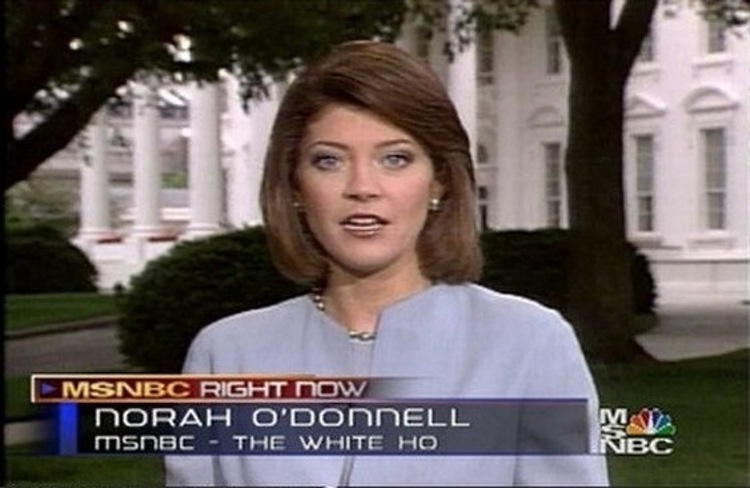
Sometimes missing letters or words can be catastrophic for a writer. A good spell checker won’t leave you hanging with ‘Boob’ when it was meant to be ‘Bob’, or ‘Joe Bloggs, rapist’, instead of ‘Joe Bloggs, Therapist’ or ‘White Ho reporter, Jane Bloggs’, instead of ‘White House reporter, Jane Bloggs’…see what I mean? Awkward.

The point is, we proofread our writing for grammatical errors and bad spelling, but punctuation is equally significant. It’s hard these days because many of us write blogs and those of us that do, write conversationally; the way we speak. I think that’s fine but in newsprint, newsletters, corporate documentation, websites and student uni dissertations, it needs to be formalised. Cut out the additional ellipses and use em dashes, forget the slang – dress up your language. I know we don’t say, in real life, things like, ‘please don’t hesitate to call me should you require anything further’, we say, ‘give me a call if I can help you with anything else…’ but that’s how we roll and what people expect, unless it’s a novel or piece of creative writing, then there is a colloquialism expectation and acceptance.

On occasion, grammatical errors are mistaken for spelling errors. This is when the spelling is actually correct but used inaccurately, such as ‘the plain descended rapidly’ rather than ‘plane’ or ‘breath easy’, instead of ‘breathe easy’. These are not spelling gaffes, they are grammar blunders, and they are not okay.  


There are plenty of freelance editors and proofreaders out there, it just so happens. I’m the best ;-)…whoops just broke my own rule. www.kirstieanders.com 

Friday, 28 August 2015

Editing Diversity

Having so much access to American television here in Australia means we grow up seeing words spelt the way they spell them the United States. Different to us and mostly not acceptable for Australians to use at school, Uni or in business. Even our spell checkers default at the US spelling often. It drives me nuts when my daughter who is seven says, candy instead of lollies, flashlight instead of torch, drugstore instead of chemist, sidewalk rather than footpath and states she is taking a shower instead of having one. One thing that's easy to remember is that Americans use 'z' in many words, where we use 's' and even pronounce 'Z' contrarily. Examples of 'Z' usage; antagonize versus antagonise, analysed and analysed, appetizer and appetiser and so on. Americans often also shorten words by removing a letter such as, anesthetic and anaesthetic, archeological and archaeological, mold versus mould, favor as opposed to favour and behaviour and behaviour. There are word alterations like center versus centre, color versus colour, tire and tyre, plow and plough and so on and on. So, who have we to blame or thank for all this American drama? The nineteenth century, American lexicographer, Mr Noah Webster, of the dictionary fame. He supposed making the changes away from British language would make America more superior and set them aside. It has certainly set them aside.

The Oxford comma, Harvard comma or serial comma. There are supporters for and against the use of it. It is also known as the pretentious comma and at the end of the day is optional and up to the author unless following a particular style. We in Australia don't use it as often as Americans although there are arguments that it clarifies meanings within sentences that may be confusing otherwise. What is it? It is the comma positioned directly before the coordinating conjunction such as: and, or, or nor in a sequence of three terms or more. An example using the Oxford comma is: I have a recipe, a pot, and an oven. Not using the comma would look like: I have a recipe, a pot and an oven.

€‹The exclamation mark has been called the cheap whore of punctuation. My thoughts are, there is a place for it, but professionally it does not belong. The more the merrier also should not apply and as F. Scott Fitzgerald said 'Cut out all these exclamation points. An exclamation point is like laughing at your own joke.' It's a useful way of conveying emotions, irony, annoyance, or friendliness when used six at a time for instance as a text, or on Facebook, email or any other electronic means. In addition, this sets up the foundation for others to respond similarly with 17!!!!! or ???????, such as, 'I just jumped out of a plane and my parachute opened!!!!!!' Really?????? Cool!!!!!!' Ridiculous.

I love the logogram ampersand (&) which epitomises 'and' but when used correctly. Not for use willy nilly or in some haphazard manner. It does not save on your word count students. An ampersand originated from Latin of course, as et which meant and. An example of good use could be in a business title like Anders & Wallace Editing or in academic references such as (Anders & Judd, 2007). It wouldn't be appropriate to use to write something like, 'They put the bricks & mortar against the wall.'

Font use looks like fun. But there's a place for countless font practice like on a circus banner or in a comic. That's right people comic sans as whimsical as it is, should be used in a comic - and nowhere else. Particular fonts work better on hardcopy (times new roman, courier or fonts with feet/serif) and others better on screen (Sans-serif, Helvetica, Century gothic, Verdana, Arial or fonts without feet/sans serif). Although pixel resolution has changed you still need to consider small devices. I think use of a particular font or fonts can really affect readability so my advice is not to 'blend it up'. That's okay when making a mixed tape but not for a letter or other document. Keep your readers. Don't use impact for a whole page, or kitch it up with pages of Bradley hand and papyrus... well pffftt. I have no idea what wingdings is for.
As an editor and proofreader, my role is to sort through the diversity and confusion of the written word to guide and advise for excellent readability and credibility. 

http://www.kirstieanders.com


Thursday, 14 May 2015

Tautologies and Feedback

When writing a paper, using a trillion purposeless words are a waste of time. They’re unnecessarily filling. It’s like pouring custard on a custard tart. Why would you do it? It is an obvious striving to reach that word count that looms ahead of you and you have run out of references or things to say. Thing is, your lecturer knows this.  You’re probably better off being under the word count than adding verbose jargon.  Reading papers like this as an editor and proofreader is like listening to a wordy little tune by Paul Simon about a bat faced girl.  No-one really enjoys that. My red pen comes out and slashes at these words with teeth bared and great resolve and gladness.  Superfluous words like tautologies of; in  addition or worse - in addition to that, furthermore, also, still, moreover, henceforth (personal disgust), hereafter, nonetheless, nevertheless. Then there is the over use of ‘the’ and ‘so’.  You don’t need to use ‘the’ all the time. ‘The best practice’ for example is okay, in fact superior being called ‘best practice’.  I can often see thesaurus suggestions jump out at me in paragraphs that have required paraphrasing. Phrases like ‘a large proportion’ instead of the word, ‘many’. ‘By virtue of the fact that’, actually just ‘because’ would do. What about ‘sum total’ isn’t that the same thing? Or ‘unexpected surprise?’  However, (there just did it myself, but sometimes it is necessary, you can’t always just leap into a room without knocking first) reading page after page where an author has consistently and persistently used the same phrase at every paragraph without pause, like ‘in addition’ rather than mixing it up just a bit really does my head in. 

It’s funny, or maybe not that funny, that authors have asked me after proofreading and/or editing many works, what I thought of the paper as a whole. I do understand this but find it immaterial too. My role is to correct it, make it better, they want the feedback. I feel that it’s a bit like when a defendant asks his/her lawyer, ‘do you think I'm innocent?’ and the lawyer says, ‘it’s not what I think, it’s what I can prove’. It doesn't matter what I think, it’s what I can do to make it the best it can be. But I understand that feedback is important and I'm the one reading their work so it makes sense. What I have noticed is that when I give feedback, the client develops more of a trust with me and I feel more supportive. It alters our relationship just that little bit and in a positive way because I have gone from just some entity making red and blue marks on their papers to someone who has some feeling and opinion about what they have written. I think they deserve feedback and make a point now to give some encouraging comments as well as suggestions of what they might need to change to make it great. Proofreader and editor? http://kirstieanders16.wix.com/editingproofreading

Thursday, 9 April 2015

Attention to detail


Can you imagine a world where written work you produced was perfect? It could mean a 5-20% higher grade. It could mean embarrassing mistakes aren’t found that can reduce businesses to seemingly, ‘unprofessional with little aptitude’. It means a respectable reputation and public confidence.

Proofreading can help immeasurably. Your job is to get the words down. My job as proofreader is the attention to detail, to tidy it up, make it faultless and get you that better grade, perfect English and superior reputation. Editing, is also a service that can make a huge difference to your documents, projects, theses, brochures and so on. Just one or two errors in an essay or piece of work can change the meaning and sentence structure that might come across in a way you didn’t intend.
Online proofreading saves you time and effort to get your work proofed or edited without leaving home, Uni or work. The job can be completed fast and more efficiently and emailed back for you to go over and resend back if needed before the due date.  It also ensures there is a trail via email should you misplace a hardcopy. Many people feel that they can proofread their own copy but this isn’t as easy as you think. Proofreading and editing work that has been completed by a professional will provide you with a much better job. When you are too familiar with the work, it is hard to pick out typos and other errors that a professional will see immediately. Work can be done on hard copy and scanned and emailed or using tracked changes and emailed.

For ESL (English second language) students in particular, conversational English can differ greatly when it comes to putting information down on paper. It can be incredibly daunting for these students who know their content well but require some editing or proofreading to assist in tying it together.


When talking about attention to detail you don't want to come across as sounding redundant by getting sentences back to front or being repetitious but it’s not always easy to be resourceful in prose. Editing and then proofreading your work who is trained to be detailed and particular is what will enhance your work. detail is what makes a masterpiece. For an affordable quote, see my website at http://kirstieanders16.wix.com/editingproofreading